Over 63 million Americans provide unpaid care to a family member living with a chronic illness, disability, or age-related condition. Across Asia, that figure runs into the hundreds of millions. And as populations age and care needs grow more complex, the demand for structured, coordinated home care is not slowing down.
Yet the infrastructure supporting most family caregivers has not kept pace. Schedules live in group chats. Medication logs sit in notebooks. Doctor’s notes buried in email chains that half the care team never sees. The result is not just operational chaos; it is a measurable risk to patient outcomes.
Caregiver management platforms are changing that. And for healthcare technology leaders evaluating their next investment, the case for centralized care coordination software has never been more compelling.
The Challenges of Home Care Coordination
Managing Multiple Responsibilities
Ask any primary caregiver what their day looks like and the answer comes fast. Medication schedules, doctor appointments, meal planning, nutrition monitoring, daily care tasks, health tracking. The list does not pause. These responsibilities do not exist in isolation. They overlap, conflict, and compound, and they all demand attention simultaneously.
The cognitive load is significant. Most caregivers are not managing one task at a time. They are holding an entire care ecosystem in their heads, switching between clinical decisions and logistical coordination without pause.
Communication Gaps Among Caregivers
Home care is rarely a solo responsibility. Multiple family members are typically involved, each holding a piece of the picture. One sibling manages medications. Another handles specialist appointments. A professional caregiver covers daily physical care. A remote coordinator checks in weekly.
The problem is that none of these people are working from the same record. Information is scattered across calls, texts, emails, and handwritten notes. Updates get missed. Tasks get duplicated. Critical observations made by one caregiver never reach the person who needs to act on them.
Administrative Burden and Caregiver Stress
The physical demands of caregiving are well documented. Less visible is the administrative weight: tracking health records manually, reconciling conflicting information, and balancing caregiving alongside full-time professional and personal life.
Research consistently shows that caregiver stress is driven as much by coordination overhead as by the care itself. Time spent organizing information is time not spent on the patient.
Why Traditional Care Management Methods Fall Short
The Limitations of Paper-Based and Manual Tracking
Paper-based care logs were never designed for multi-caregiver environments. A handwritten medication schedule works when one person is responsible. It breaks the moment care becomes shared across family members, professional caregivers, and remote coordinators.
Inconsistent record keeping leads to information gaps. Records that exist only in one location are inaccessible to everyone else when a decision needs to be made quickly. And the likelihood of errors compounds with every manual handoff.
Challenges with Using Multiple Tools
Separate apps for appointments, medications, and communication create a different version of the same problem. A medication tracker does not talk to the appointment calendar. The nutrition log does not surface in the health monitoring view. Your care team ends up with five sources of partial truth and no unified picture of the patient.
The result is inefficient workflows, duplicated effort, and a care team that is always slightly out of sync. Disconnected tools mean disconnected decisions.
What Is a Caregiver Management Platform?
A Centralized Approach to Care Coordination
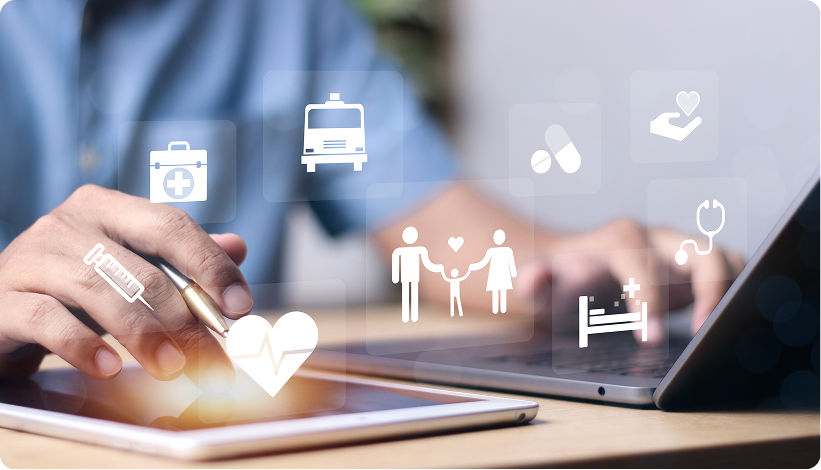
A caregiver management platform brings every caregiving activity into one place. Medication schedules, appointment tracking, nutrition planning, health monitoring, and caregiver communication are all accessible to every member of the care team in real time.
The primary users are family caregivers managing care at home, professional caregivers delivering hands-on support, and care coordinators overseeing broader care plans. Each of them works from the same record.
How It Supports Better Care Delivery
Real-time access to information changes the operational dynamic entirely. A professional caregiver logs a symptom observation at 10 AM. By 10:05, the family member handling specialist communication has seen it and can decide whether it warrants a call. No relay, no delay, no version mismatch.
Shared visibility across care teams reduces the information asymmetry that leads to missed interventions. When everyone is working from the same data, decisions are faster, more informed, and less likely to fall through the gaps.
Key Features That Simplify Home Care Coordination
-
Centralized Care Dashboard
The dashboard is the operational command center. Daily care tasks, upcoming appointments, flagged health updates, and pending medication doses are all visible in a single view. For care coordinators managing multiple patients, this kind of consolidated oversight is the difference between proactive management and constant reactive firefighting.
-
Medication Management
Medication non-adherence is a leading driver of avoidable hospital readmissions; a pattern consistently reflected in healthcare outcome studies. A caregiver management platform addresses this directly through structured medication scheduling, automated reminder notifications, adherence tracking with historical logs, and alerts for missed doses.
Care teams stop relying on memory and start working from verified records.
-
Nutrition and Wellness Tracking
For patients managing chronic conditions, nutrition is clinical, not incidental. Meal planning tools, dietary recommendations aligned to care plans, and nutritional progress tracking give caregivers the visibility to support long-term wellness goals rather than just completing daily tasks.
-
Health Monitoring
Symptom logging, vital signs recording, and longitudinal progress tracking give care teams a data trail that supports better clinical decision-making. When a patient’s condition changes gradually, that trend is far easier to identify within a structured monitoring system than across a collection of informal notes and texts.
-
Multi-Caregiver Collaboration
Shared care records and real-time activity updates mean every member of the care team is working from current information. Role-based access lets administrators define what each team member can view and update, protecting patient privacy while ensuring the right people have the right information at the right time.
-
Automated Alerts and Notifications
Medication reminders, appointment alerts, care task notifications, and important health updates can all be automated within the platform. This removes the low-value coordination work that currently consumes significant caregiver time and redirects that capacity toward actual care delivery.
Benefits of a Caregiver Management Platform
-
Improved Care Coordination
Better communication among caregivers directly reduces information gaps. When every update is logged in one shared environment and every team member works from the same record, the information gaps that currently create risk simply close.
-
Reduced Caregiver Stress
Less manual tracking means less cognitive overhead. A platform that handles reminders, logs, and coordination automatically gives caregivers back the mental bandwidth that administrative work currently consumes.
-
Better Visibility into Health and Wellness
Comprehensive care information in one place supports more informed caregiving decisions. Caregivers are not guessing about what happened on a previous shift or trying to piece together a symptom timeline from three different sources.
-
Enhanced Patient Support
Consistent care delivery improves adherence to prescribed care plans. When medication schedules, nutrition targets, and daily care activities are all tracked in one environment, patients receive more reliable support and fewer things fall through.
-
Greater Efficiency for Families and Care Teams
Streamlined workflows and reduced administrative effort free up time across the entire care team. The hours spent chasing updates, reconciling records, and coordinating logistics can be redirected toward care.
How Technology Is Transforming Family Caregiving
The Shift Toward Digital Care Management
The adoption of caregiving technology is accelerating. Families are increasingly comfortable managing care digitally. Healthcare systems are actively incentivizing coordination tools that reduce avoidable readmissions and emergency visits. Remote and collaborative care solutions are no longer emerging options. They are the expected baseline for organized home care delivery.
Creating More Connected Care Experiences
Real-time communication and centralized data access are redefining what home care coordination looks like in practice. When every member of a care team can see the same information, act on the same alerts, and contribute to the same record, care stops being a fragmented individual effort and becomes a connected, coordinated system.
This is the infrastructure that long-term care management demands. And platforms that deliver it are setting the operational standard the rest of the market will be measured against.
What to Look for in a Caregiver Management Platform
Essential Features
The evaluation checklist matters less than the architecture underneath it. The right platform supports genuine multi-caregiver collaboration rather than assuming a single primary user. It integrates medication tracking, nutrition monitoring, health data, and caregiver communication into a single data environment rather than a collection of siloed modules. And it needs to be fully functional on mobile. Caregiving coordination does not happen at a desk.
Security and privacy controls are non-negotiable in any healthcare-adjacent environment. Compliance requirements should be addressed at the architecture level, not added as an afterthought.
AI Capabilities That Enhance Caregiving
For organizations evaluating platforms at the investment or development stage, AI capabilities represent a meaningful differentiator in the space. Predictive health insights, personalized care recommendations, automated documentation and reporting, intelligent reminders and alerts, and AI-powered care coordination tools are all active areas of platform development.
The platforms that will define this category are the ones building AI into their coordination infrastructure now, rather than treating it as a future roadmap item.
Scalability and Long-Term Value
A platform built on centralized data architecture can support five patients or five hundred. As care networks grow, the coordination overhead should not scale linearly with them. The platform should absorb it. Flexibility for future integrations and enhancements is not a nice-to-have. It is a requirement for any technology investment meant to support evolving care needs over time.
The Caregiving Problem Will Not Simplify Itself
Demographic trends, rising chronic disease burdens, and increasing care complexity mean the coordination challenge facing families and professional care teams will only grow more acute over the next decade. The organizations that move early, building or deploying platforms that genuinely unify the caregiving workflow, will set the operational standard the rest of the market catches up to.
Building a caregiver management platform that care teams will actually use requires more than a feature list. It requires the right architecture from the ground up. If your organization is exploring platform development, modernization, or AI integration for home care, talk to the iTech India team. We build healthcare technology that works in the real world.