Introduction
Manufacturing has progressed significantly in its digital journey. Today’s plants run on connected systems, high-precision sensors, and a constant stream of operational data. On paper, the foundation for smarter decision-making is already in place. The challenge, however, is no longer access to data, it is acting on it in time.
Across production floors, quality teams, procurement, and supply chains, execution still depends heavily on manual coordination. A deviation flagged in one system rarely triggers action in another without human involvement. Teams step in to review records, validate inputs, and push updates across platforms.
This gap does more than slow things down. It creates friction, delays that affect throughput, inconsistencies that impact quality, and dependencies that limit scalability. Even well-digitized environments struggle when execution relies on constant human intervention.
The shift now is not toward more data, but toward better execution. This is where Agentic AI begins to make a difference.
The Execution Gap in Modern Manufacturing
In many manufacturing environments, digital transformation has reached a plateau. Organizations have invested in IoT sensors, Manufacturing Execution Systems (MES), ERP platforms, and digital Bills of Materials. Data moves efficiently, dashboards are detailed, and alerts are generated in real time.
Yet a critical gap remains.
When a sensor detects an anomaly such as a temperature spike or a dimensional variance, the system raises an alert. What follows is often a manual sequence. An operator reviews the issue, checks engineering drawings, verifies supplier inputs, and updates systems accordingly.
This is not a data problem. It is a reasoning gap.
The systems can detect and inform, but they cannot interpret context or act independently. In manufacturing, where timing and precision are critical, even small delays can ripple across operations.
Consider common scenarios:
- A minor defect continues across multiple cycles before intervention
- A supplier mismatch is identified only after materials arrive
- A maintenance issue escalates due to delayed response
In each case, the limitation is the same. Systems surface insights but stop short of acting on them.
From Alerts to Action: The Role of Agentic AI
Agentic AI introduces a shift from passive systems to active participants in operations. Instead of only processing data or generating alerts, these systems are designed to pursue goals autonomously. They interpret context, make decisions, execute tasks, and improve based on outcomes.
In simple terms, Agentic AI does not just support workflows. It drives them.
Consider a scenario involving supplier invoices. Instead of extracting data alone, an AI agent can cross check the invoice with original CAD specifications, purchase order terms, and quality requirements. If a discrepancy is found, the issue is flagged to the vendor before the material reaches the production floor.
This goes beyond traditional automation. It reflects a move toward autonomous engineering, where systems connect insight with action in real time.
Rule-based automation depends on predefined paths. Agentic AI works differently. It adapts to context, reasons through complexity, and takes initiative, closing the gap between detection and execution.
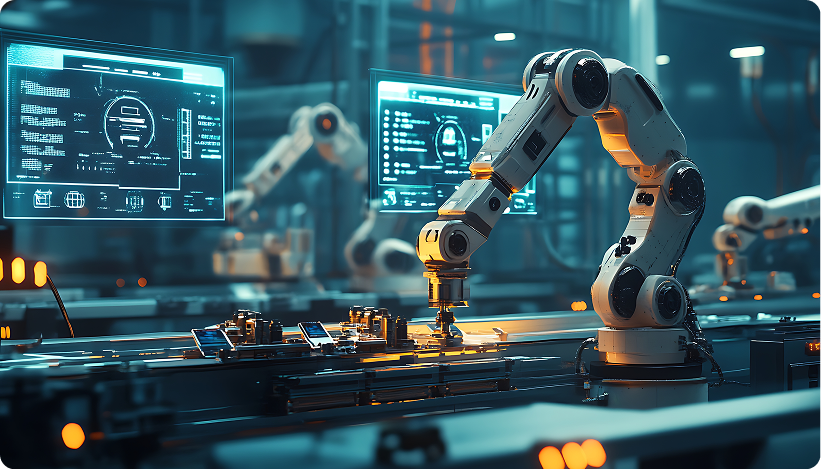
Agentic Operations Matrix: AI Across Manufacturing Functions
Agentic AI delivers its full value when it is embedded across functions, not confined to a single workflow. In a modern manufacturing setup, this means creating a network of intelligent agents that continuously communicate, reason, and act together. Instead of isolated automations, organizations begin to see coordinated execution across production, supply chain, engineering, and beyond.
What emerges is not just efficiency, but operational alignment. Functions become more responsive because they no longer wait on manual triggers from one another.
1. Production Operations: Autonomous and Adaptive Workflows
The production floor is where even minor inefficiencies can scale into significant losses. Agentic AI introduces a level of responsiveness that traditional systems struggle to achieve.
- Autonomous Workflow Orchestration Production orders move seamlessly across MES, ERP, and quality systems without manual routing. When inventory levels shift or priorities change, procurement actions are triggered automatically.
- Direct Task Execution Tasks such as updating production logs, initiating work orders, or generating purchase requests are handled by AI agents, reducing dependency on manual input.
- Dynamic Resource & Capacity Planning Machine allocation, tooling usage, and workforce deployment are continuously optimized based on real time inputs such as demand, urgency, and availability.
- Field & Onsite Diagnostic Guidance Operators receive contextual troubleshooting steps, safety alerts, and operational guidance directly on the shop floor.
This creates a production environment that is:
- More responsive to real time disruptions
- Less dependent on manual coordination
- Better synchronized across systems
2. Intelligent Supply Chain Operations with Agentic AI
Supply chains operate under constant pressure from demand variability and logistical complexity. Agentic AI introduces speed and clarity into this environment.
- Strategic Negotiation & Contracting AI agents evaluate supplier bids, benchmark pricing, and assist in preparing RFQs for faster and more informed decisions.
- Inventory & Logistics Integration Mismatches between warehouse systems and transportation records are identified and resolved automatically.
- Customer & Demand Signal Monitoring Production schedules are continuously refined using real time order patterns and forecast data.
This leads to:
- Faster procurement cycles
- Reduced reconciliation errors
- Improved alignment with demand
3. AI-Driven Engineering and Product Development
Engineering teams rely on accurate, structured, and accessible information. Agentic AI enhances both speed and precision in this domain.
- Intelligent Document Processing Data from CAD drawings, SOPs, and certification documents is extracted and structured for seamless integration into BOM systems.
- Simulation & Scenario Planning AI agents model production setups and failure scenarios before implementation, reducing risk and improving planning accuracy.
- Research & Knowledge Retrieval Maintenance histories, repair logs, and technical documentation are retrieved instantly to support faster engineering decisions.
This enables engineering teams to:
- Reduce time spent on manual data handling
- Improve accuracy in planning and execution
- Focus more on innovation and optimization
4. Sales & Customer Success: Proactive Communication at Scale
Modern manufacturing requires proactive communication and transparency with customers. Agentic AI helps meet these expectations consistently.
- Stakeholder Communication Management Updates on production status, delays, or quality checks are shared automatically with relevant stakeholders.
- Exception & Escalation Triage When issues occur, AI agents compile all relevant data and route it to the appropriate team with full context.
This results in:
- Faster issue resolution
- Improved communication consistency
- Stronger customer trust
5. Financial Operations: Accuracy, Speed, and Compliance
Financial workflows demand both speed and accuracy. Agentic AI streamlines these processes while maintaining compliance.
- Autonomous Three Way Matching Invoices are matched with purchase orders and receipts automatically, accelerating approvals.
- Invoice Rejection Management Errors such as missing line items or tax mismatches are identified early, reducing delays.
- Discrepancy Triage & Resolution Pricing variations are evaluated against contract terms for intelligent validation.
- Audit Ready Transaction Logging Every transaction is recorded with full traceability for compliance and auditing.
This leads to:
- Faster processing cycles
- Fewer manual validation loops
- Stronger financial control and transparency
6. Workforce Operations: Planning, Training, and Optimization
A well supported workforce is critical to manufacturing success. Agentic AI strengthens HR operations by improving efficiency and preparedness.
- Automated Workforce Operations Hiring approvals, onboarding workflows, and performance tracking are managed across systems with minimal manual effort.
- Workforce Planning & Simulation AI agents model different workforce scenarios to support planning under changing conditions.
- Contextual Training & Onboarding Operators receive real time guidance during machine setup and safety procedures.
This helps organizations:
- Improve workforce readiness
- Reduce onboarding time
- Align staffing with production needs
7. Legal, Compliance, and Risk: Embedded Governance
Compliance requirements continue to grow in complexity. Agentic AI embeds governance directly into operational workflows.
- Regulatory Intelligence Monitoring Changes in safety standards and regulations are tracked continuously and flagged proactively.
- Integration & Data Quality Governance Data inconsistencies across systems are identified and corrected before they impact production.
This ensures:
- Proactive compliance management
- Reduced operational risk
- Higher data reliability across systems
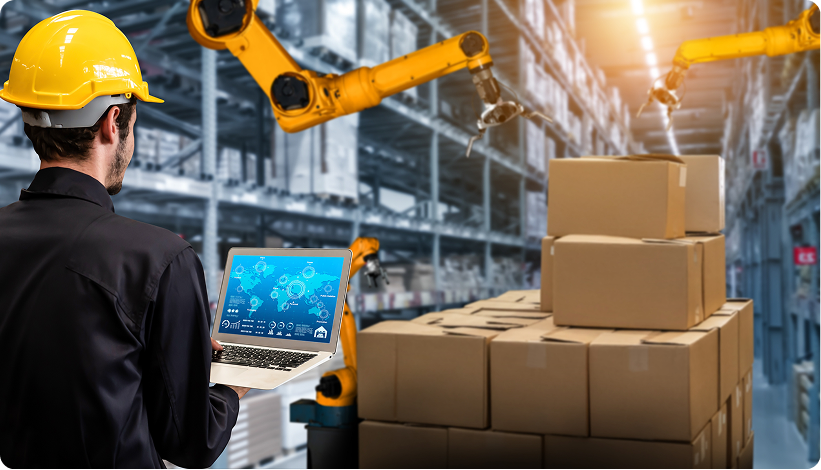
The Power of Synchronized Decision-Making: The “Sync” Advantage
One of the key strengths of Agentic AI is its ability to coordinate across functions. In traditional systems, functions operate in silos, and communication often depends on human intervention. Agentic AI creates a more connected environment where systems interact and respond directly.
When a maintenance agent predicts a machine failure, it initiates a coordinated chain of actions:
- The scheduling agent reallocates production
- The procurement agent orders the required part
- The operations system updates timelines
Across these functions, the real strength of Agentic AI lies in how decisions are aligned through shared context. Each agent contributes to a unified system where actions are timely and synchronized.
The result is not just automation, but a manufacturing environment that runs with greater clarity, coordination, and continuous intelligence.
Why Custom Agentic AI Development Matters
The effectiveness of Agentic AI depends heavily on how it is built and deployed.
Generic solutions often fall short in manufacturing environments, where processes are nuanced and tolerances are tight. Recognizing patterns is not enough. Systems must understand context at a granular level.
Custom-developed AI agents are trained on organization-specific data, including standard operating procedures, proprietary CAD standards, historical production records, and unique workflows.
This enables them to reason with a level of precision closer to experienced engineers, making decisions that are both accurate and context aware. In manufacturing, where small deviations can have significant consequences, that level of precision is essential.
The Road Ahead for Agentic AI in Manufacturing
The role of AI in manufacturing is shifting from task execution to enabling faster, more consistent decision-making across functions. The focus is no longer just on what can be automated, but on who is empowered to act across production, quality, and operations.
Agentic AI introduces intelligent agents that work alongside human teams, handling routine coordination and responding to disruptions in real time. Human oversight remains essential for safety and quality, while everyday delays are reduced.
The result is a more stable, responsive system that improves efficiency, strengthens existing processes, and supports a manufacturing environment that is continuously evolving.