Introduction
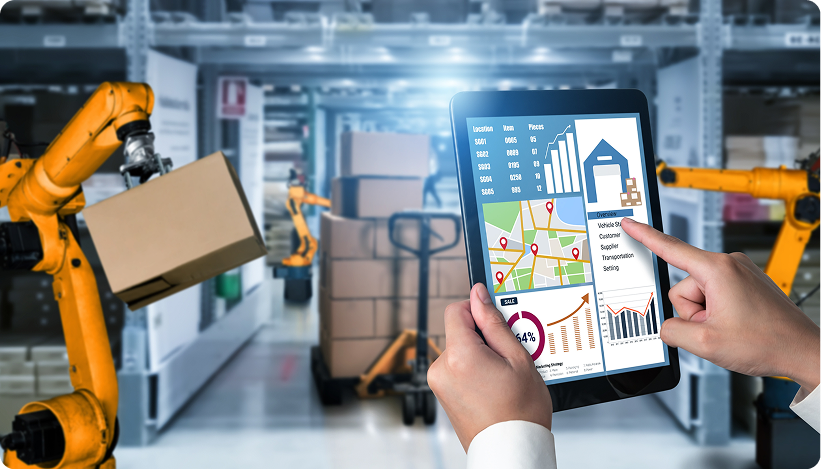
Modern logistics systems are more advanced than ever. With real-time tracking, dashboards, and integrated platforms, organizations today have unprecedented visibility into their operations. You can track shipments across continents, monitor warehouse throughput, and even predict delivery windows with reasonable accuracy.
But here’s the catch; visibility alone doesn’t drive action.
Across transportation, warehousing, customs, and customer operations, teams are still heavily dependent on manual coordination to respond to disruptions. When something goes wrong, people step in—calling carriers, checking systems, updating records, and informing customers.
This constant reliance on human intervention creates a system that is inherently reactive. And in an industry where timing, precision, and coordination are everything, reactive workflows lead to delays, inefficiencies, and missed opportunities.
To truly transform logistics operations, the focus needs to shift from seeing problems to solving them instantly. That’s where Agentic AI comes in.
The Operational Reality: Logistics is a Game of Exception Management
At its core, logistics isn’t about moving goods smoothly; it’s about handling exceptions efficiently.
Most systems today can tell you:
- Where your shipment is
- When it is expected to arrive
- Whether it’s delayed
But they cannot answer the most important question: “What should we do about it?”
Consider a common scenario. A truck carrying critical inventory is delayed due to severe weather. The system flags the delay, but what happens next?
- Operations teams scramble to reroute shipments
- Warehouse managers adjust schedules manually
- Customer service teams inform clients after the delay is already visible
- Finance teams deal with downstream impacts like penalties or billing discrepancies
This is what most logistics teams deal with daily, constant firefighting.
Even routine tasks like reconciling bills of lading, validating customs documentation, or coordinating between systems require manual effort. These fragmented workflows slow down decision-making and increase the risk of errors.
The result? A system that is visible, but not intelligent. Connected, but not responsive.
From Alerts to Action: Enabling Autonomous Decision-Making
Agentic AI changes the equation entirely. Instead of waiting for a human to detect and respond to an issue, AI agents continuously monitor, decide, and act in real time.
Think of it as an autonomous dispatcher that:
- Tracks weather patterns, traffic, and port congestion
- Predicts disruptions before they occur
- Reroutes shipments proactively
- Notifies stakeholders instantly
For example, if a shipment is at risk of delay due to port congestion:
- The system identifies the risk early
- Evaluates alternative routes or carriers
- Executes rerouting decisions automatically
- Updates delivery timelines
- Notifies customers before they even notice a delay
This isn’t just automation; it’s autonomous operations.
The shift is subtle but powerful:
From “alerting humans about problems” → to “resolving problems instantly.”
Agents in Logistics: Mapping the Operational Landscape
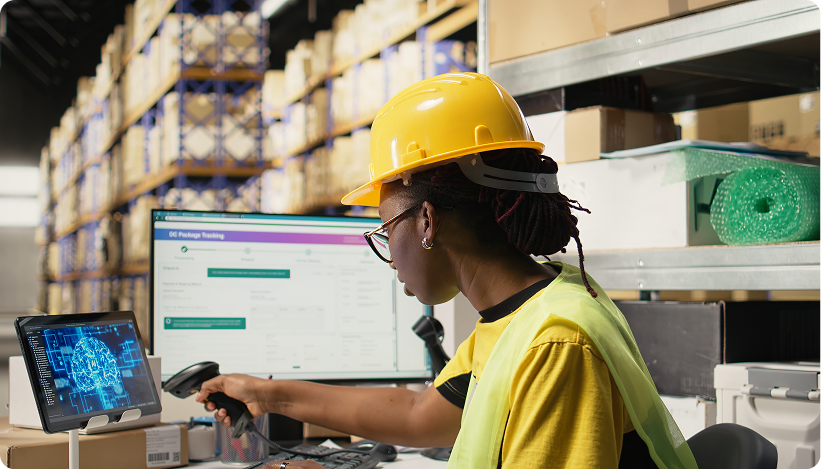
To truly understand the value of Agentic AI in logistics, it’s important to look beyond isolated use cases. The real transformation happens when AI agents operate across functions coordinating, deciding, and executing in sync.
Think of this as an Agentic Operations Matrix, where each function in the logistics ecosystem is supported by specialized AI agents that not only perform tasks but also collaborate with each other in real time.
1. Operations & Distribution
This is the operational core of logistics, where even small inefficiencies can create large downstream impacts. AI agents here focus on execution, coordination, and real-time adaptability.
Autonomous Fulfilment Coordination
Instead of teams manually aligning warehouse schedules, shipment plans, and carrier availability, AI agents orchestrate fulfilment end-to-end. They connect WMS, TMS, and third-party systems to ensure that inventory movement, picking, packing, and dispatch all happen in a synchronized flow.
For example, if an inbound shipment is delayed, the agent can automatically adjust outbound fulfilment plans to avoid cascading delays.
Dynamic Route & Asset Allocation
Traditional planning relies on static assumptions. Agentic AI continuously evaluates real-time inputs—like traffic conditions, order volumes, and warehouse capacity—to dynamically allocate resources.
This means:
- Dock doors are reassigned based on incoming load changes
- Fleet routes are optimized on the fly
- Warehouse labor is redistributed to high-priority zones
The result is better asset utilization and reduced idle time.
Real-Time Task Guidance
AI agents act as digital assistants for on-ground staff. Warehouse pickers, supervisors, and drivers receive context-aware instructions that adapt to real-time conditions. If priorities shift, the system doesn’t wait for a supervisor; it updates tasks instantly, ensuring that everyone is always working on what matters most.
Direct Task Execution
Beyond guidance, agents can take action. They can confirm bookings, update shipment statuses, and trigger workflows directly within core systems. This reduces dependency on manual data entry and ensures that systems remain accurate and up to date at all times.
2. Supply Chain & Procurement
Planning and procurement decisions often determine how resilient a logistics network is. AI agents here bring predictive intelligence and strategic optimization.
Strategic Carrier Negotiation
Instead of relying solely on historical relationships or static contracts, AI agents analyze global carrier rates, performance metrics, and contract terms. They can recommend optimal tendering strategies for specific lanes, helping organizations balance cost, reliability, and service levels.
Demand Signal Integration
Demand in logistics is rarely constant. Seasonal spikes, regional trends, and customer behavior all influence capacity requirements. AI agents continuously monitor these signals and adjust procurement and allocation strategies accordingly ensuring that supply matches demand without overcommitting resources.
Partner Resource Orchestration
From suppliers to third-party logistics providers, coordination is often fragmented. AI agents streamline this by triggering partner actions automatically.
For instance, if inventory levels drop below a threshold, the system can initiate replenishment orders or adjust supplier schedules without waiting for manual intervention.
3. Engineering & R&D (Systems & Solutions)
Behind every efficient logistics operation is a strong systems foundation. AI agents in this layer focus on data intelligence, system optimization, and future readiness.
Intelligent Document Processing (IDP)
Logistics generates massive volumes of documentation—bills of lading, customs forms, invoices, and Proof of Delivery (POD).
AI agents can extract, validate, and structure this data automatically, feeding it into TMS, ERP, and finance systems. This not only speeds up processes but also reduces errors significantly.
Network Simulation & Stress-Testing
What happens if demand spikes by 30% next quarter? Or if a key route becomes unavailable?
AI agents can simulate these scenarios, allowing organizations to test different configurations and prepare for disruptions before they occur.
Research & Knowledge Retrieval
Instead of manually searching through contracts or historical data, teams can rely on AI agents to instantly retrieve relevant insights, whether it’s carrier performance benchmarks or past shipment records.
4. Sales & Customer Success
In logistics, customer experience is directly tied to transparency and responsiveness. AI agents help shift from reactive communication to proactive engagement.
Autonomous Stakeholder Communication
Rather than waiting for customers to ask for updates, AI agents proactively share shipment statuses, revised ETAs, and exception alerts.
This builds trust and reduces the burden on customer support teams.
Exception Triage & Escalation
Not all issues require human attention. AI agents categorize exceptions based on severity and context, resolving routine issues automatically while escalating critical ones with complete background information.
This ensures that human teams focus only on high-value decisions.
5. Financial Operations & Accounts Payable
Financial processes in logistics are often complex due to multiple stakeholders and data sources. AI agents bring accuracy, speed, and transparency.
Autonomous Three-Way Matching
Invoices, purchase orders, and delivery receipts are matched automatically. Any discrepancies are flagged and resolved with minimal human input, reducing delays in payments.
Billing & Data Reconciliation
Data inconsistencies across WMS, TMS, and ERP systems can lead to disputes. AI agents continuously validate and reconcile data, ensuring alignment across systems.
Audit & Traceability Logging
Every transaction, shipment event, and document is logged systematically, making audits simpler and ensuring compliance with regulatory requirements.
6. Human Resources
Workforce efficiency is a key factor in logistics performance. AI agents support operational agility and workforce readiness.
Automated Workforce Operations
Routine HR tasks like approvals, onboarding workflows, and payroll processing are handled seamlessly across systems.
Contextual Staff Onboarding
New hires, whether drivers or warehouse staff, receive step-by-step guidance tailored to their role and context. This reduces training time and improves compliance.
Workforce Planning & Simulation
AI agents model different workforce scenarios, helping organizations prepare for peak seasons, labor shortages, or unexpected disruptions.
7. Legal, Compliance & Risk
Given the global nature of logistics, compliance and risk management are critical. AI agents ensure continuous monitoring and governance.
Customs & Regulatory Intelligence
Regulations change frequently across regions. AI agents track these changes in real time and ensure that operations remain compliant across all corridors.
Integration & Data Quality Governance
Data inconsistencies can create significant risks. AI agents detect and resolve integration issues, ensuring that all systems operate with accurate and consistent information.
Bringing It All Together
What makes this matrix powerful is not just the individual capabilities, but how these agents interact and collaborate.
A delay detected in transportation can instantly trigger adjustments in warehousing, updates in customer communication, and recalculations in financial systems. This level of coordination transforms logistics from a series of disconnected processes into a truly intelligent, responsive ecosystem.
The “Sync” Advantage: Connected Intelligence Across Operations
The true power of Agentic AI lies not just in individual capabilities, but in how agents work together.
Imagine this scenario:
- A tracking agent detects a delayed shipment
- It immediately informs the warehouse agent to reprioritize dock schedules
- The finance agent updates carrier performance metrics
- Customer communication is triggered automatically
All of this happens in seconds, without human intervention. This is what we call synchronized intelligence.
Instead of isolated systems and manual handoffs, logistics operations become a connected ecosystem where every function responds in real time.
Why Custom Development Matters
Logistics is not a one-size-fits-all industry.
Every organization has:
- Unique carrier networks
- Specific last-mile delivery models
- Customized warehouse layouts
- Proprietary workflows
These elements are often the source of competitive advantages.
Off-the-shelf solutions may offer basic automation, but they cannot fully adapt to these complexities.
Custom-built AI agents, on the other hand:
- Align with your existing systems and processes
- Adapt to your operational nuances
- Scale with your business needs
- Deliver targeted, high-impact outcomes
For companies looking to stay ahead, investing in tailored Agentic AI solutions is not just beneficial, it’s essential.
Real-World Impact: What This Looks Like in Practice
Let’s bring this to life with a simple example.
A global logistics company handling high-value shipments across multiple regions implemented agentic operations.
Before:
- Delays were identified late
- Teams manually coordinated responses
- Customers were informed after disruptions
- Financial reconciliation took days
After implementing AI agents:
- Delays were predicted hours in advance
- Shipments were rerouted automatically
- Customers received proactive updates
- Invoice matching and reconciliation became near instant
The result?
- Faster delivery times
- Reduced operational costs
- Improved customer satisfaction
- Better decision-making across teams
Conclusion
AI in logistics is no longer just about automation; it’s about empowerment across the entire supply chain.
The real shift isn’t in what gets automated, but in who is enabled to act:
- Operations teams move from firefighting to strategic oversight
- Systems evolve from passive tools to active decision-makers
- Organizations become faster, smarter, and more resilient
Human expertise still plays a critical role, especially in strategic and high-impact decisions. But when it comes to handling real-time disruptions, routing adjustments, and demand fluctuations, instant, intelligent actions make all the difference.
If you’re looking to elevate your logistics operations and rethink how your systems respond to real-world challenges, the right Agentic AI approach can transform your entire workflow.
Ready to Move Beyond Reactive Logistics?
At itechindia.co, we help organizations design and implement intelligent, agent-driven systems tailored to their unique logistics environments. If you’re exploring how to improve efficiency, reduce delays, and build a more resilient supply chain, now is the right time to start.
Let’s build logistics systems that don’t just track operations but actively run them.